
My favorite distraction when attempting to practice zazen (Zen sitting) is worrying about all the things that need fixing. Yet I have been reminded that we adopt a still and upright posture in Zen for a reason: The body trains the mind.
Can’t sit still, because something urgent needs to be done? Mind racing because something has to be figured out, right now? Me too.
My favorite distraction when attempting to practice zazen (Zen sitting) is worrying about all the things that need fixing. Yet I have been reminded that we adopt a still and upright posture in Zen for a reason: The body trains the mind.
The liberation that Zen offers is real! Yet, as I explain in my book, Zen practice must be engaged with carefully.

“Practicing Safe Zen imparts a lesson we all will have to learn if we want to truly mature in our spiritual practice…” —Barry Magid, author, Ending the Pursuit of Happiness
“…This is a thoroughly engaging exploration based on deep knowledge of the tradition as well as contemporary research.” —Martine Batchelor, author, Principles of Zen
The book was released in June 2025, and is can be purchased from Indiepubs and other booksellers. With the publisher’s permission, I’ve reproduced (most of) the introduction below. I hope you will be inspired to read the rest!
Continue reading “Practicing Safe Zen”The story of the Buddha’s Enlightenment is usually told as a quest story with a lone hero. What does that miss?

On the first night of our sesshin (residential retreat) celebrating the Buddhist holiday of Rohatsu, we read a pretty standard, simplified recounting of the story. It starts with Siddartha Gautama riding away from his family and palace and ends with his transformation into Shakaymuni Buddha. The plot is pretty familiar, really.
We can widen our views of the types of relationships that are possible by comparing our habitual “entity” thinking with Zen-inspired “process” thinking. This may help organizations prevent or deal with abuses of power.

Recall that in “process thinking” we acknowledge that what we commonly perceive as “things” actually arise from activities and relationships (Non-Duality Part I). There are no static “essences,” and the world is in continual cycles of creation and destruction. The provisional “thing” I call “me” is no exception.
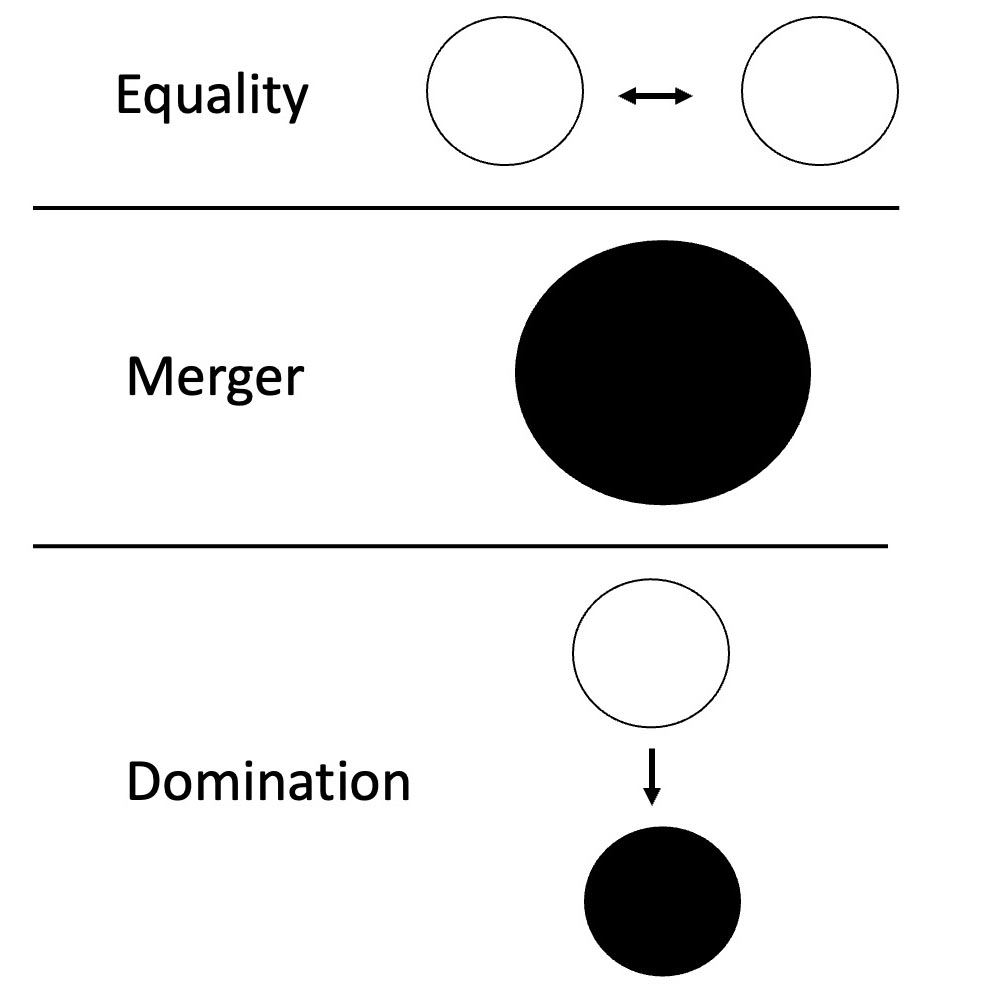
Our usual way of viewing the world as made up of entities that first exist and only later act and relate to each other constricts our thinking. Within it, we can only image three ways of relating: equality, merger, or domination.
In the yin-yang diagram, both light and dark are necessary, and their relationship is dynamic. But in our habitual Western thought not only do we separate the two and think of them as fixed, we tend to associate light with superior and dark with inferior.
The yin-yang diagram illustrates how nonduality includes duality—but must be understood through dynamic “process” thinking rather than static “entity” thinking.
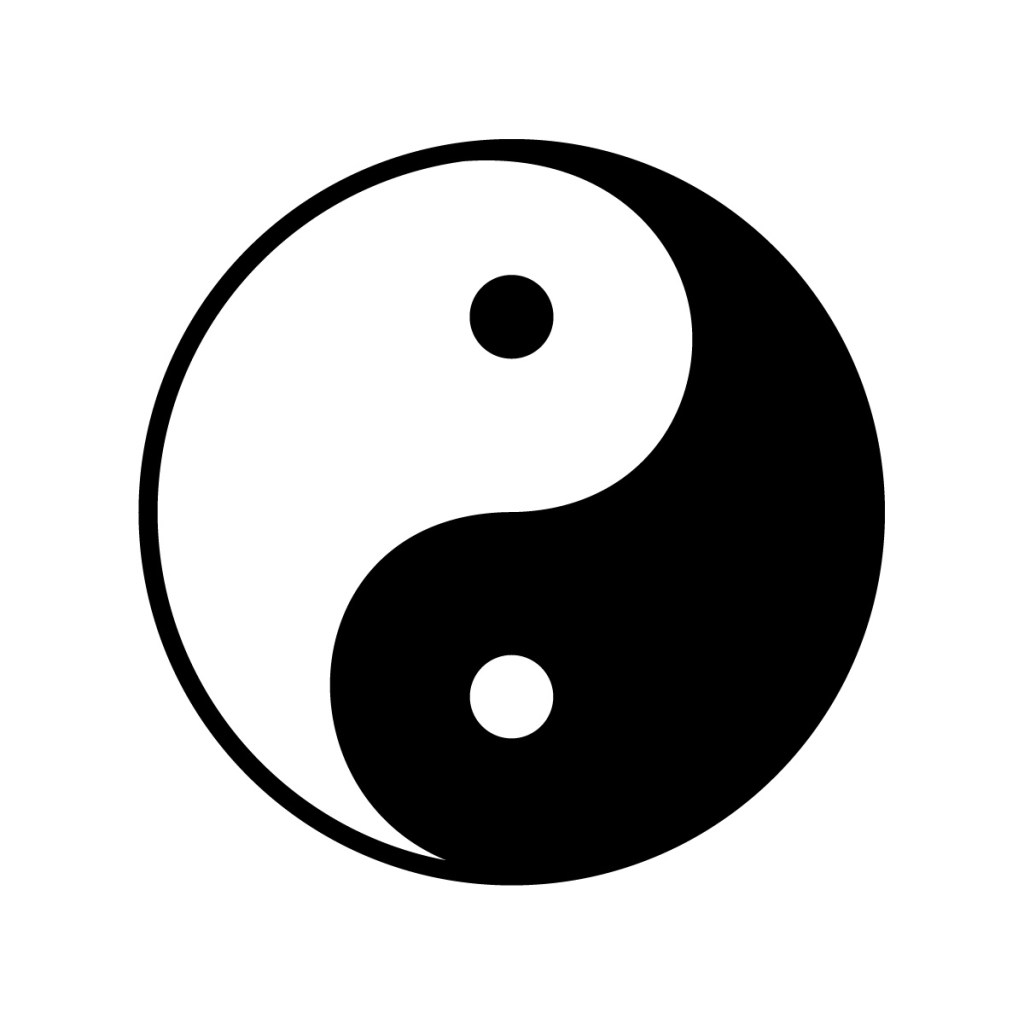
While the metaphor of the ocean (oneness) and the waves (many) that temporarily arise is a wonderful illustration of nondualism, it doesn’t spawn much further understanding. The ancient Chinese yin-yang diagram (shown here), associated with Daoism, highlights more dimensions.
To understand nonduality, we have to take a step backward and look at the fundamentals of how we think about the world. If we take an “entity” view, it makes no sense. If we understand the world as “process,” though, we can see that this is, in fact, the reality of our life.

Abide not in duality,
refrain from all pursuit of it.
If there’s a trace of right and wrong
true-mind is lost, confused, distraught…
From One-mind comes duality,
but cling not even to this One…
These verses are from the Zen sutra entitled “Affirming Faith in Mind” (“Xinxinming” by Jianzhi Sengcan).
Continue reading “Non-Duality Part I: Entity vs. Process Thinking”A few days ago, I was interviewed by Oshan Joshan for his podcast series “Musing Minds.” We talked about both economics, Zen, gender…so on some of the same themes I’ve addressed elsewhere on this blog.
Oshan gave the interview the title “What If ‘Capitalism’ Isn’t the Problem?” That’s not to say we don’t have enormous problems! Only that we have mis-identified their source.
My dharma buddy Jeff Seul, a lawyer, and I co-wrote this article published in Trike Daily:
https://tricycle.org/trikedaily/opinion-corporations-anti-dharma/
Why is a veggie burger better than nirvana?

Did you hear about the Buddhist coroner who got fired? In the space for “cause of death” on the certificates she had to fill out, she kept writing in “birth.”
I’ve been musing lately about the relationship between Zen practice and humor. Continue reading “Wise. Cracks.”
 Julie A. Nelson